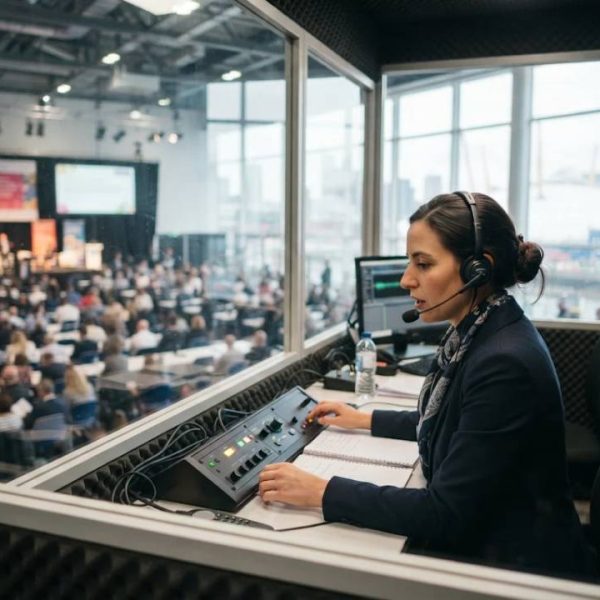
When a minister from Paris addresses a room of English speaking delegates, the audience hears a calm voice in their headphones a few seconds behind the speaker. That voice belongs to a conference interpreter, and the quality of the work decides whether the message lands. French to English interpreting is one of the most requested language pairs in diplomacy, business and law. This guide explains how professional interpreters work, which modes suit which events, how to prepare a meeting and how to choose a provider you can trust.
Why French and English Are a Classic Pair
French and English share a long history, thousands of related words and a tradition of official bilingualism in many international bodies. That closeness is deceptive. Sentence structure, rhetorical habits and levels of formality differ, and false friends such as actuellement and eventuellement trap even fluent speakers. A trained interpreter handles these differences in real time.
Fluency is only the entry ticket, because interpreting demands memory, speed, analysis and calm under pressure that ordinary bilingual skills do not provide.
Simultaneous and Consecutive Modes
In simultaneous interpreting, the interpreter sits in a booth, listens through headphones and speaks into a microphone while the speaker continues. This mode suits conferences and large meetings. In consecutive interpreting, the speaker pauses every minute or so and the interpreter renders the segment, often using a personal note taking system. It fits negotiations, interviews and small meetings.
Whispered interpreting, called chuchotage, serves one or two listeners without equipment.
Who Sets the Standards
The International Association of Conference Interpreters publishes professional standards on working conditions, team size, booth quality and ethics. Interpreters who follow these rules work in pairs and switch every twenty to thirty minutes, because accuracy drops quickly when fatigue sets in. Ask any provider whether its interpreters respect such guidelines.
Compliance with recognized standards is a sign that quality matters to the company.
Preparation Makes the Difference
Interpreters prepare for every assignment. They read the agenda, speeches, slides and previous minutes, then build a glossary with the terms they expect. The more material you send in advance, the better the result. Send names of speakers, acronyms and any sensitive topics, ideally a week before the event.
A short briefing call on the morning of the meeting lets the interpreter clarify the last details.
Equipment and Room Setup
Simultaneous interpreting needs booths that meet international standards, a sound system, receivers for the audience and a technician. Smaller events can use portable equipment. The interpreters must see the speaker and the screen, otherwise they miss gestures and slides. Check sightlines when you plan the room.
Test every microphone before the doors open and keep a spare ready.
Remote and Hybrid Events
Many events now combine participants on site and online. Remote simultaneous interpreting platforms give listeners a language channel, while interpreters work from a studio or a quiet home office with professional audio. Clear sound is critical, so require wired internet, a good headset and a backup connection.
Run a full rehearsal with the platform before the real session.
Written Material That Supports Interpreting
Interpreters often work alongside translators. Speeches, brochures and contracts need written translation, and consistent terminology between the two services avoids confusion. If you need english to french translation services for documents prepared for the same event, coordinate both projects with one glossary.
Our note on interpreter versus translator explains why these two professions require different skills and why one cannot replace the other.
When those written materials are contracts or filings that will be read by regulators, investors or a court, the translation carries the same weight as the original document. Specialist document translation services handle exactly this kind of work, keeping legal and financial wording precise across French and English. Investment firms rely on that precision when their cross-border filings must satisfy two sets of rules at once. Coordinating the written translation with the interpreting team, under one shared glossary, keeps every version of the message consistent.
Costs and Contracts
Interpreters usually charge by the day or half day, with extra fees for preparation, travel and equipment. A longer day needs at least two interpreters per language. Request a written quote that lists every cost and the cancellation terms. Prices that look too low often hide missing equipment or a single interpreter assigned to a long day.
Decide what you need first, then compare offers on equal terms.
Confidentiality and Ethics
Interpreters hear sensitive information. They are bound by professional secrecy and must remain neutral, rendering everything faithfully without adding opinions. Never ask an interpreter to soften a message or to explain what a speaker really meant, since that crosses the line between interpreting and advising.
Sign a confidentiality agreement when the content is sensitive.
Speaking So That You Can Be Interpreted
Speakers can help enormously. Speak at a natural pace, pause between ideas, avoid long jokes built on wordplay and spell out numbers and names. Read speeches from a script only after sharing it in advance, since reading aloud at high speed makes the interpreter's task far harder. Look at the audience, not at the booth, and thank the interpreters at the end.
Small courtesies produce better results for everyone in the room.
After the Event
Ask the interpreters for notes about difficult terms and any problems with sound or materials. Add new vocabulary to your glossary and share feedback with the provider. A short debrief turns one successful meeting into the foundation for the next one, and over time a stable team of interpreters learns your organization and its vocabulary.
Consistent teams also save preparation time and reduce risk.
Choosing the Right Provider
Look for interpreters with proven experience in your field, references from similar events and clear credentials. Ask who will actually be in the booth, not just who signs the contract. Check that the company handles equipment, backups and last minute changes, and that it communicates clearly from the first inquiry.
A transparent provider answers these questions without hesitation and helps you decide what you really need.